
Colombia changes constantly.
Light shifts with altitude. Air carries different weight depending on the region. Landscapes move from stone to jungle to sea within hours. And every celebration absorbs that transformation.
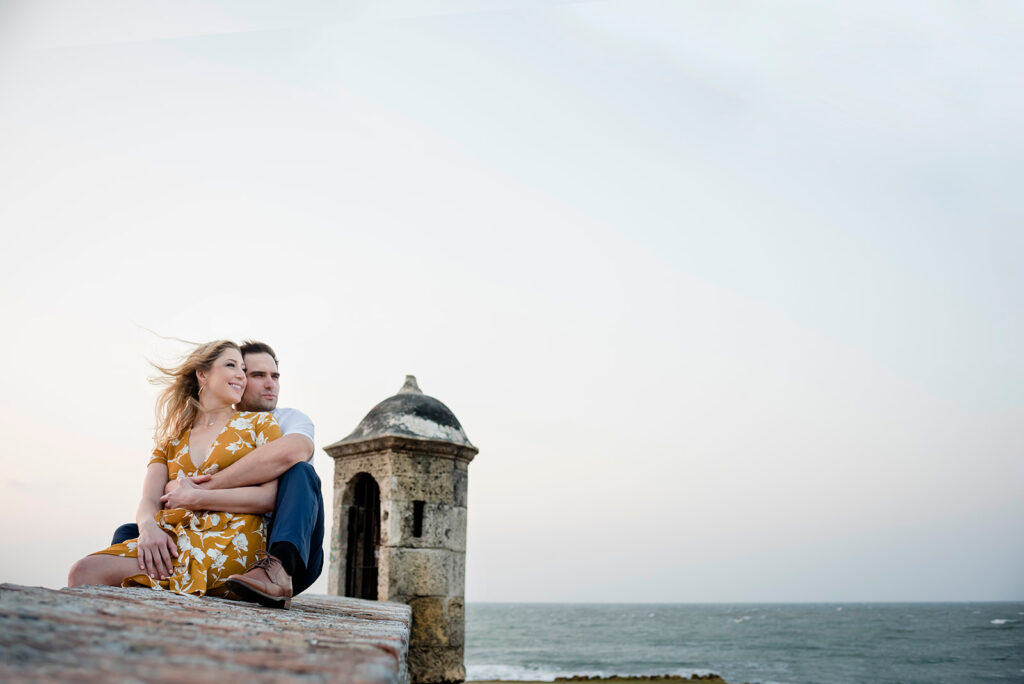
In Cartagena, evenings linger against coral walls warmed by the sun. Candlelight reflects off centuries-old stone. The Caribbean breeze moves through open courtyards, lifting veils, softening silhouettes. The city does not sit in the background — it frames every gesture.
At altitude in Bogotá, the air sharpens detail. Historic estates open onto quiet savannahs. The sky feels closer. There is a restraint to the light here — diffused, controlled — that gives photographs a certain depth.
Medellín rests between mountains that fold into one another. Modern architecture emerges from green hillsides. Late afternoon stretches long enough to slow everything down. Movement becomes subtle. Expression becomes quiet.
In Cali, warmth settles into the landscape. Skin catches golden tones. Music carries across open spaces. Celebrations unfold with a fluid elegance that feels effortless.
The hills of the Eje Cafetero hold a different kind of atmosphere. Morning mist drifts across plantations. Haciendas sit suspended in green. And in the Valle del Cocora, wax palms rise impossibly tall against open sky — vertical lines cutting through fog, creating images that feel almost surreal.
In Manizales, weather shifts quickly. Clouds roll in, then disappear. Light breaks unexpectedly across mountain ridges. Every frame feels dynamic.
Villavicencio opens toward endless plains. Sunsets stretch horizontally, washing everything in amber. Shadows lengthen slowly across open land.
Near Santa Marta, jungle meets sea. The Sierra Nevada rises behind the coastline, creating contrast between dense green and deep blue. The wind moves constantly. Textures become part of the composition.
Barranquilla brings a contemporary Caribbean atmosphere — cleaner lines, sharper silhouettes, coastal light reflecting off modern spaces.
Further along the coast, Palomino feels raw and expansive. Sand, ocean, sky. Very little interruption. Intimate gatherings settle into the landscape naturally.
Close to Montería, stretches of secluded shoreline offer privacy and distance. Open beaches and understated estates create room for silence — and for images defined by horizon and texture.
In Villa de Leyva, stone dominates. The plaza expands outward in pale symmetry. As evening falls, shadows stretch across white facades, creating contrast that feels architectural, almost sculptural.
And in Barichara, narrow streets and warm stone carry a quiet intimacy. Light slips gently across facades at dusk, leaving everything softened.
Colombia does not offer a single aesthetic. It offers atmosphere.
And atmosphere cannot be described entirely — it has to be seen.